
FLOOD CLEANUP IN GARLAND
Flood Damage Restoration in Garland, TX
Rainwater came under the garage door. There’s mud on the floor, the carpet inside feels wet, and you’re wondering whether the water reached the wall. Or a broken water line flooded two rooms before you could stop it. Either way, what you see on the surface may not be all the damage.
Flooded home or business in Garland? Call +1 (945) 325-1998 now for flood damage cleanup help. Tell us where the water reached and whether it is still coming in.
FLOODWATER • SOAKED FLOORS • HIDDEN DAMAGE
START HERE
Flooded Home or Business in Garland? Here's What to Do Next
If you’re standing at the edge of a flooded room, you don’t need to figure out the entire cleanup plan right now. First, make sure nobody gets hurt.
If water has reached outlets, appliances, wiring, or an electrical panel, stay clear. Don't step into standing water to switch off a breaker. A qualified electrician or utility provider may need to isolate the power.
Rain runoff can pick up sewage, chemicals, and debris on its way indoors. Keep children and pets away, even if the water looks clear.
A supply valve may stop a broken pipe or appliance leak. Don't enter a flooded or electrically unsafe area to reach it.
Capture the waterline, rooms, soaked belongings, and where water entered. Don't risk your safety to save a box or take a photo.
If floodwater is rising, the building appears unstable, or you’re facing immediate danger, leave and contact emergency services. Once you’re safe, call +1 (945) 325-1998 for Garland flood cleanup help. You don’t need to know whether the water reached the subfloor before making that call.
Floodwater still inside your property? Call for cleanup help.
FOLLOW THE WATER
What Caused the Flooding—and How Far Has It Spread?
Picture a Garland garage after a heavy downpour. Water has pushed past the door seal and left a dirty line along the wall. The garage floor is wet, but so is the edge of the room behind it. Did the water stop at the doorway? Or did it travel beneath the flooring?
That’s the question an assessment needs to answer. Different flood sources leave different problems:
Water may carry silt and dirt across concrete, into stored boxes, and beneath the edge of adjoining flooring.
The visible stain may be small even when insulation, drywall, or trim has absorbed water.
Several rooms can flood without any storm involved. The source may start as clean supply water, but the surfaces it reaches still matter.
A possible sewage source needs more caution than an ordinary indoor leak.
Look for swollen baseboards, lifting flooring, soft drywall, a wet cabinet toe kick, or water crossing into another room. A shallow puddle can leave a larger area wet when it sits against absorbent materials. Where the water went matters more than how deep it looked at first.
If a broken pipe is still flooding the property, our Emergency Water Damage Restoration in Garland page covers the broader emergency response.
AFTER THE WATER RECEDES
Why Flood Cleanup Doesn't End When the Water Is Gone
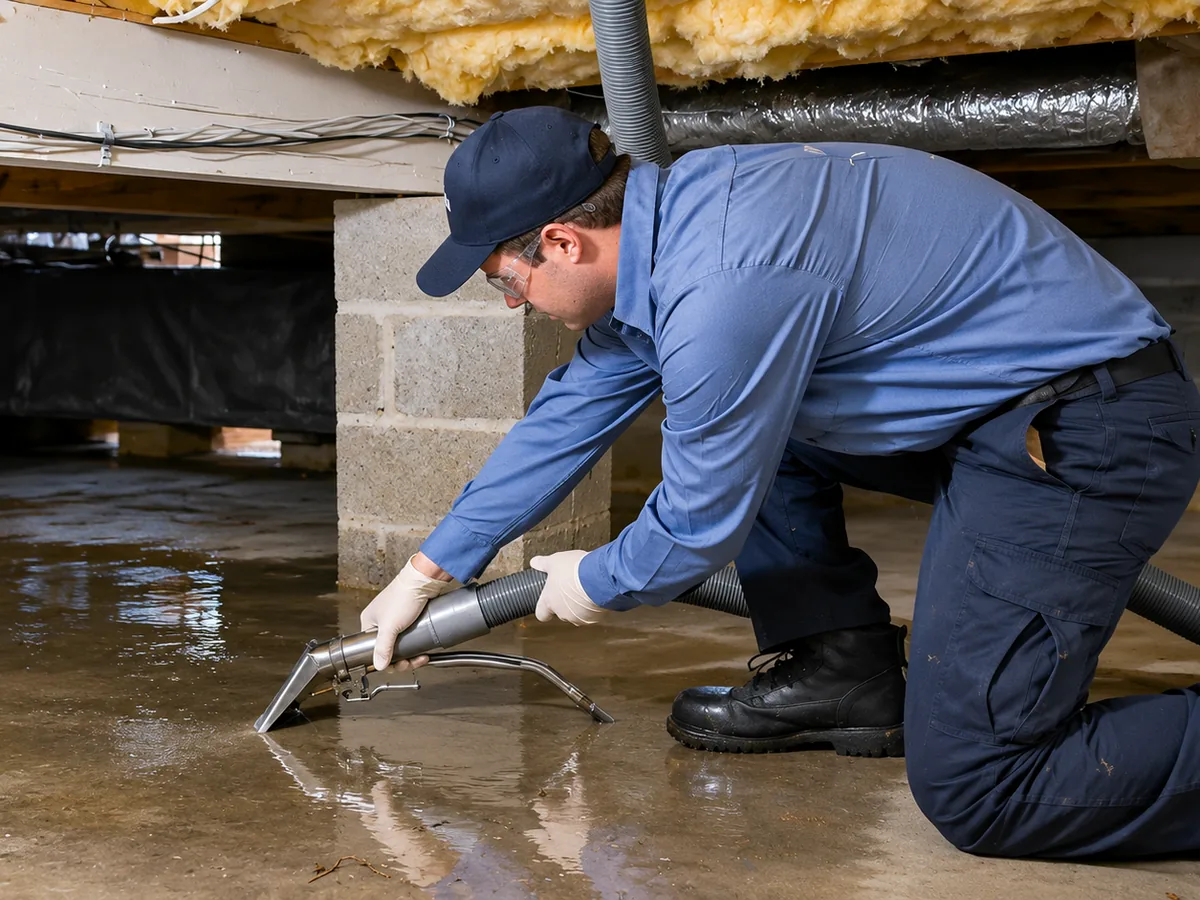
A wet/dry vacuum can remove accessible water from a suitable, electrically safe surface. But imagine the garage looks clear afterward and there’s still a brown line at the bottom of the drywall. Mud may be trapped beneath stored items. Carpet padding may still be soaked. The wall cavity may have taken in water even though the floor is no longer flooded.
For outdoor flooding, there are two separate questions: What was contaminated? And what is still wet? Both affect the work.
Hard, cleanable surfaces may need debris removal, washing, and appropriate treatment. Flood-contaminated drywall, insulation, and carpet padding often cannot simply be dried and left in place. Running fans across a dirty, contaminated area before proper cleanup isn’t a substitute for removing contamination.
This is the difference between flood damage cleanup and simply pumping water out. The goal is to deal with the residue and affected materials as well as the moisture you can’t see.
THE CLEANUP PROCESS
What Happens During Flood Damage Cleanup?
You shouldn’t have to agree to ripping out walls—or accept a promise that everything can stay—before anyone checks what actually got wet. A useful flood restoration assessment should explain the source, the affected area, and why each cleanup step is being recommended.
The work generally follows this sequence, with the exact scope decided by the provider and the property conditions:
Determine whether electrical risks, structural concerns, or potentially contaminated floodwater make the area unsafe. If water is still entering, the source or entry problem needs attention.
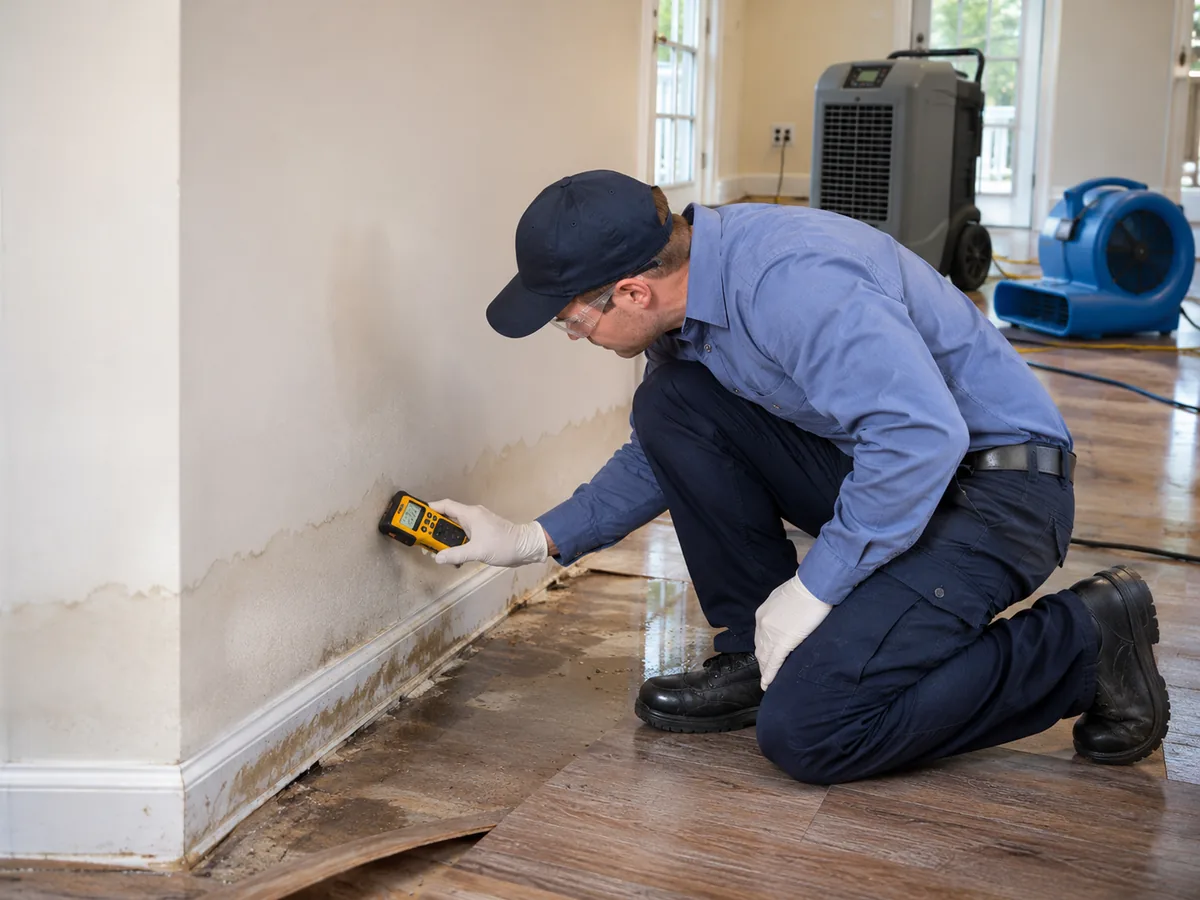
Look at the flood line, lower walls, flooring edges, cabinet bases, carpet padding, and adjoining rooms. Moisture readings can help identify materials that remain wet.
Extraction may be part of the work, but stormwater cleanup can also require clearing silt and damaged materials before surfaces are ready for cleaning.
A tile surface, a carpet pad, and a piece of wet insulation do not get the same treatment. Water source and material condition guide the decision.
Suitable remaining surfaces are cleaned; drying follows where appropriate. Repeated moisture checks help determine whether wet materials have reached suitable drying goals.
Before work begins, ask: Which materials are affected? Why does this part need removal? What remains wet after extraction? A clear explanation is more useful than a generic list of machines.
WHAT CAN BE SAVED
Can Flood-Soaked Carpets, Drywall, and Belongings Be Saved?
This is where many homeowners hesitate. The water is gone, but now someone is talking about pulling up carpet or opening a wall. Does all of it really have to come out? Not necessarily. But some flood-soaked materials are difficult or unsafe to keep, especially after exposure to dirty outdoor water.
Carpet and padding. A carpet can feel almost dry on top while the pad underneath holds water. If runoff from the street or yard soaked it, cleaning the surface doesn’t necessarily remove contamination from the backing and padding. Materials exposed to contaminated floodwater often require disposal. Carpet affected by a recent clean supply-line leak is a different assessment.
Drywall and insulation. Drywall wicks water upward from the bottom like a paper towel. The visible flood line may not be the upper limit of moisture. Wet or flood-contaminated wallboard and insulation may need removal so concealed areas can be properly addressed. That doesn’t mean every wall in the room should automatically be torn down.
Floors and cabinet bases. Mud may wash off tile, but moisture can remain along grout joints, under adjacent flooring, or behind a cabinet toe kick. Laminate and other wood-based flooring can swell at seams. Whether a floor can be retained depends on its construction, contamination, and condition—not just how it looks from above.
Furniture and belongings. Some plastic, glass, metal, and other nonporous items can be cleaned. Upholstered furniture, mattresses, books, and absorbent items are harder to recover after contaminated flooding. Keep records of damaged belongings, but don’t handle anything in an unsafe area.
The right question isn’t “Can everything be saved?” It’s “Which items can be cleaned and dried safely, and which cannot?” A material-by-material assessment helps avoid both unnecessary disposal and leaving damaged materials behind.
Carpet soaked? Drywall swelling near the floor? Call +1 (945) 325-1998 for flood damage cleanup help in Garland.
MOISTURE AFTER FLOODING
The Water Has Receded. What About Hidden Moisture?
Yesterday the water covered the garage floor. Today it has drained away. But a baseboard is bulging, the wall feels soft near the bottom, or there’s a damp smell by the adjoining room. The visible flood is over; the damage may not be.
Water can stay beneath floating floors, in carpet padding, inside insulation, and behind cabinets. Some materials dry much more slowly than the surface around them. The problem is easy to underestimate when the only clue is a stain a few inches above the floor.
After contaminated materials are addressed, drying may involve air movers, dehumidifiers, and repeated moisture readings. These readings help show whether materials are progressing toward suitable drying goals. A floor that feels dry isn’t proof that the subfloor is dry. And a moisture reading alone doesn’t establish that contaminated materials have been safely cleaned.
The EPA advises drying flooded materials as quickly as possible, ideally within 24–48 hours, to reduce mold risks. That is a cleanup recommendation, not a promise that every flooded property can be dried in two days. If the building has stayed wet longer, further assessment matters even more.
Don’t wait for visible mold to appear before taking persistent dampness seriously. Ask which materials were checked and how the provider will decide that drying is complete.
WHY CHECK BELOW THE SURFACE?
Dry on top does not always mean dry underneath.
Floors • Insulation • Wall cavities • Cabinets
LOCAL FLOOD CLEANUP
Flood Cleanup for Garland Homes and Businesses
Garland has more than one kind of flooding problem. Heavy North Texas rain can send surface runoff toward a low garage opening or across a storefront threshold. The City of Garland’s Floodplain & Drainage information identifies mapped floodplain corridors primarily along Duck Creek, Rowlett Creek, Spring Creek, and their tributaries. A mapped floodplain is not the only place water can enter a building, and a neighborhood name alone does not determine a property’s flood risk.
Think of two different calls. At a house in the Firewheel area, boxes are sitting in a wet attached garage and the homeowner is worried about the wall shared with a living room. Near Downtown Garland, a shop owner finds water inside the entrance, soaking floor-level inventory before opening. Neither property needs a made-up local flooding story. The real questions are where water entered, what it touched, and what cleanup is safe.
For a home, that may mean bedrooms, flooring, drywall, and furniture. For a business, it may involve merchandise, commercial flooring, shared walls, or equipment that cannot safely be used until assessed. Landlords and property managers may also need to know which units and common areas are affected.
If you’re calling about a Garland property, mention your address or ZIP code, whether the building is a home or business, and any adjoining rooms that got wet. That helps the independent provider understand the situation and discuss the appropriate next step.
WHEN TO CALL
When Should You Call for Professional Flood Restoration?
A small clean-water spill on a hard, electrically safe surface may be manageable yourself. Outdoor floodwater, dirty runoff, or water that has reached building materials is different. Don’t decide based only on whether you can still see a puddle.
Professional flood cleanup deserves consideration when:
Water entered from a yard, roadway, creek, or other outdoor source.
You see mud, silt, a dirty waterline, or suspect sewage contamination.
Carpet padding, drywall, insulation, or cabinet bases were soaked.
Water crossed into another room or went beneath the flooring.
Floodwater has receded, but materials are swelling, staining, or staying damp.
A store, office, rental unit, or shared building has multiple affected areas.
Not sure whether you need a plumber, a cleanup provider, or both? A plumber handles a broken line or plumbing source. A water damage provider addresses the water and affected building materials. Stormwater may also require fixing the exterior entry or drainage problem so it doesn’t happen again.
You don’t need a diagnosis before calling. Tell us if the water came from outside, when it entered, whether it’s still present, and which rooms or materials are wet. You can discuss the cleanup need without guessing how much work the property requires.
FLOOD CLEANUP QUESTIONS
Flood Damage Restoration FAQs
Can I Clean Up Floodwater in My Garland Garage Myself?
It depends on the water source, electrical safety, and what got wet. A little clean water on a hard floor may be manageable. But runoff that entered from a driveway or street may contain contaminants. Don’t operate a wet/dry vacuum in an electrically unsafe area or walk through water to reach outlets. If water reached drywall, insulation, stored belongings, or an adjoining room, ask a flood cleanup provider to assess the damage.
Is Flooding From a Broken Pipe Different From Stormwater Flooding?
Yes. A broken supply line may release relatively clean water at first. Stormwater can collect dirt, sewage, or chemicals before it enters a property. The cleanup depends on what the water contacted and how far it spread. If your main problem is standing water from an indoor plumbing leak, our Water Extraction & Water Removal in Garland page explains that service in more detail.
Do I Need Flood Cleanup if the Water Has Already Drained Away?
You might. Look for a dirty waterline, damp carpet padding, swollen baseboards, soft drywall, or flooring that has lifted at the edges. Water can leave contamination and retained moisture behind even after the puddle disappears. If outdoor floodwater touched absorbent materials, don’t assume surface drying finished the job.
How Long Does Flood Damage Cleanup and Drying Take in Garland?
It depends on the water source, affected rooms, materials, contamination, and how much removal or cleaning is needed. Extracting standing water and drying a wall cavity are separate stages; repairs may add more time. Ask what needs to happen before drying starts and how progress will be measured. A reliable timeline follows the assessment, not a fixed promise made before anyone sees the damage.
Flooded Property in Garland? Call for Cleanup Help
Mud along the garage wall. A soaked carpet by the back door. A storefront floor that’s dry on top but still smells damp. Those are reasons to find out what the flood left behind—not just whether the water is gone.
Call +1 (945) 325-1998 for flood damage restoration help in Garland, TX. Tell us what happened and where the water reached. We help connect Garland callers with independent water damage providers so the next cleanup step can be discussed.